
Introduction
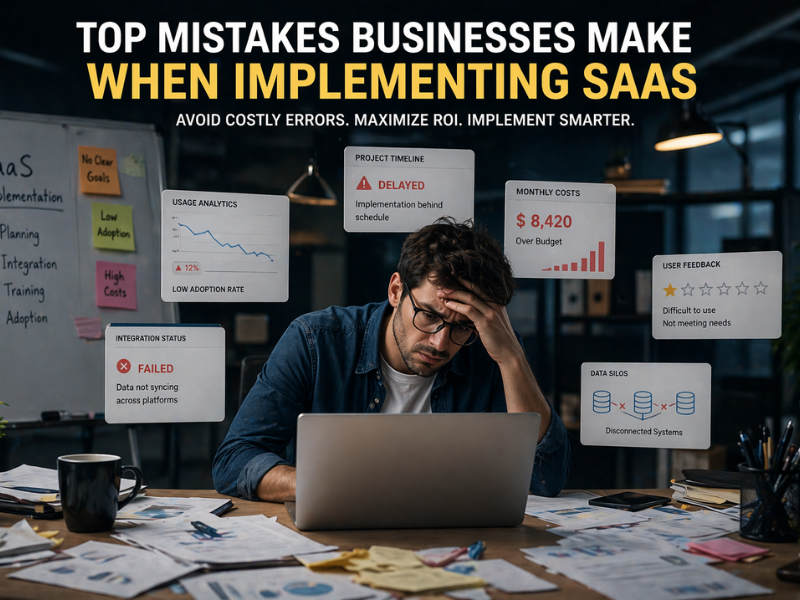
SaaS platforms have become essential for modern businesses, offering flexibility, scalability, and cost-effective solutions. However, implementing SaaS is not as simple as subscribing to a tool and starting to use it.
Many businesses fail to get the full value from SaaS because they make critical mistakes during the implementation process. These mistakes can lead to wasted money, poor performance, low adoption, and operational inefficiencies.
Understanding these common SaaS implementation mistakes can help businesses avoid costly errors and ensure a smoother transition.
Lack of Clear Objectives
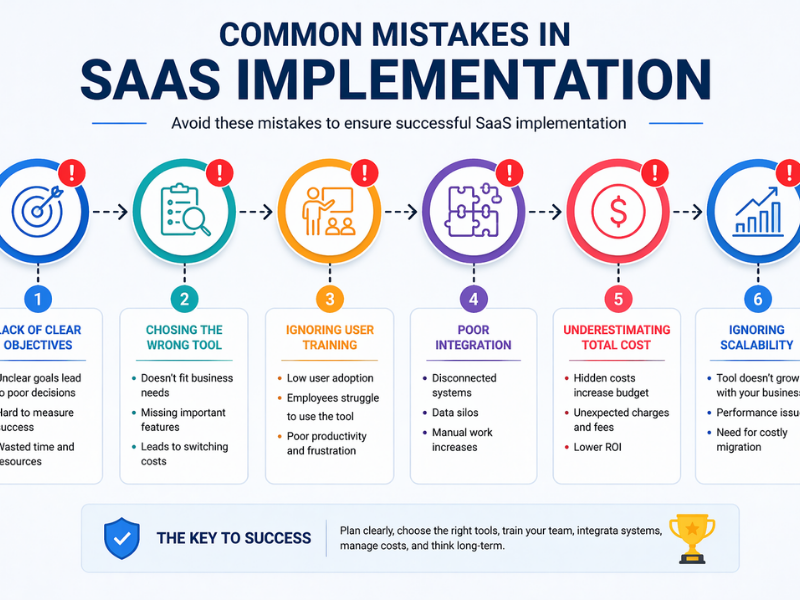
One of the biggest mistakes businesses make is implementing SaaS without clearly defining their goals.
Without a clear objective, teams end up using tools inefficiently or not using them at all.
Common Issues
• No defined problem to solve
• Choosing tools based on trends
• Lack of measurable goals
Before implementing any SaaS platform, businesses must define what success looks like.
Choosing the Wrong SaaS Tool
Selecting the wrong tool can create long-term problems.
Many businesses choose SaaS platforms based on popularity instead of actual requirements.
Why This Happens
• Poor research
• Ignoring business needs
• Overlooking feature limitations
Choosing the wrong tool often leads to switching platforms later, which increases cost and complexity.
Ignoring User Training and Onboarding

Even the best SaaS platform will fail if users do not understand how to use it.
Lack of training leads to confusion, low adoption, and poor productivity.
Common Problems
• No onboarding process
• Lack of training materials
• Employees resisting change
Proper training ensures that teams can fully utilize the software.
Poor Integration with Existing Systems
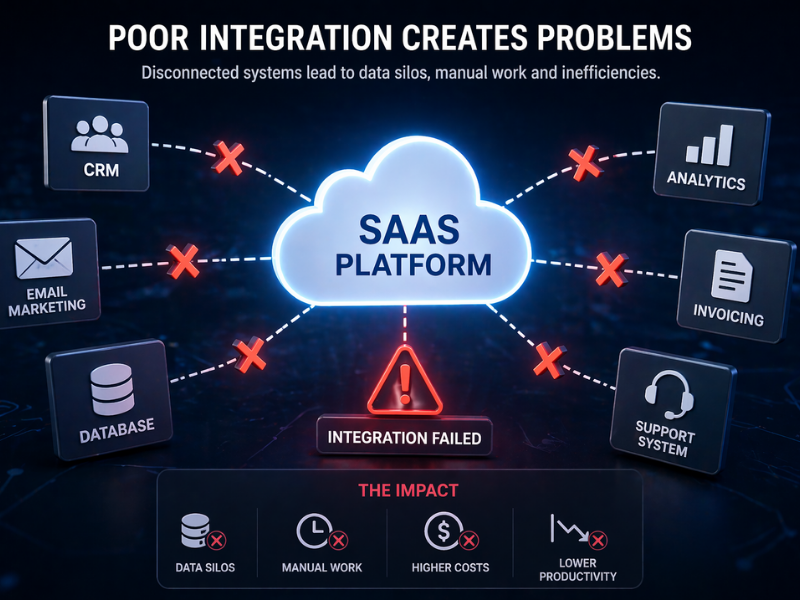
SaaS tools should work together as part of a unified system.
When integration is ignored, it creates data silos and inefficiencies.
Common Issues
• Tools not connected
• Manual data entry
• Duplicate processes
Integration is critical for building an efficient and automated workflow.
Underestimating Total Cost
Many businesses focus only on subscription pricing and ignore hidden costs.
Hidden Costs Include
• Additional user fees
• Integration costs
• Training expenses
• Upgrade charges
This can lead to budget overruns and unexpected financial pressure.
Overloading with Too Many Tools
Using too many SaaS tools can create more problems than solutions.
Problems Caused
• Complex workflows
• Confusion among teams
• Increased costs
• Reduced productivity
Businesses should focus on essential tools instead of adopting too many platforms.
Ignoring Scalability
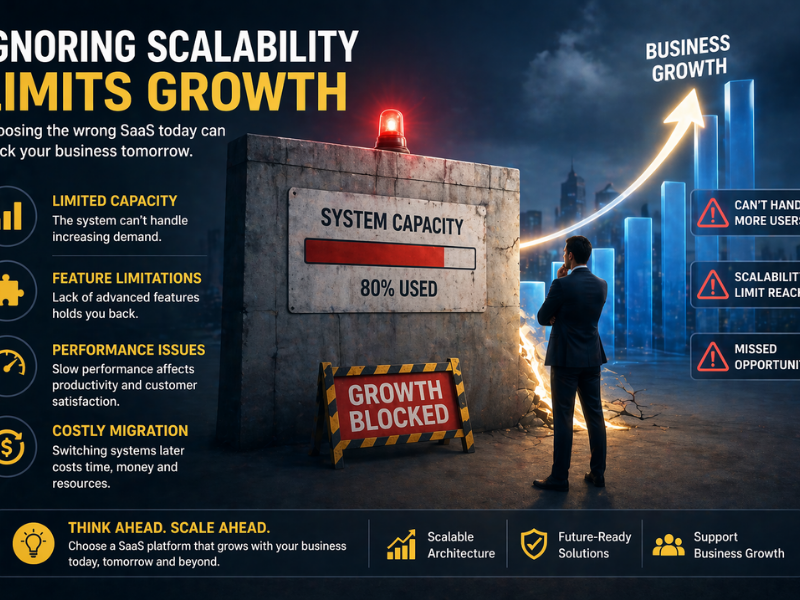
Some businesses choose tools that work for current needs but fail to scale as the business grows.
Risks
• Limited features
• Performance issues
• Need for migration
Choosing scalable SaaS platforms ensures long-term efficiency.
Lack of Data Security Awareness
Security is often overlooked during SaaS implementation.
Common Risks
• Weak access control
• Data breaches
• Compliance issues
Businesses must ensure that their SaaS platforms follow strong security standards.
Not Monitoring Performance
After implementation, many businesses stop evaluating performance.
Problems
• Inefficient usage
• Missed optimization opportunities
• Poor ROI
Regular monitoring helps improve performance and maximize value.
Resistance to Change
Employees often resist adopting new tools.
Reasons
• Fear of change
• Lack of training
• Poor communication
Change management is essential for successful SaaS implementation.
Verdict
SaaS implementation can transform a business, but only if done correctly.
The most common mistakes come from poor planning, lack of training, and ignoring long-term needs. Businesses should focus on clear objectives, proper onboarding, integration, and scalability.
Avoiding these mistakes ensures that your SaaS investment delivers real value, improves efficiency, and supports business growth.
