
Hostinger Vs Namecheap Comparison 2026: Which Hosting Is Better?
Choosing a web hosting provider can feel confusing, especially when you see similar features and prices. Two popular names are Hostinger and Namecheap. Both offer affordable hosting, but they serve different needs. In 2026, new updates and changes make this comparison even more important. This article will help you decide which hosting company is better for your website by looking at speed, uptime, pricing, features, support, and real user experiences.
Hosting Features And Plans
Both Hostinger and Namecheap offer shared hosting, WordPress hosting, VPS, and more. However, their features and plans are slightly different.
| Feature | Hostinger | Namecheap |
|---|---|---|
| Free Domain | Included (Premium & Business) | Included (Stellar Plus & above) |
| Website Builder | Yes | Yes |
| SSL Certificate | Free | Free |
| Storage | 50GB–200GB SSD | 30GB–100GB SSD |
| Backups | Weekly/Free Daily (Business) | Twice weekly |
Hostinger gives more storage and daily backups on higher plans. Namecheap includes backups twice a week, which is less frequent but still useful. Both offer free SSL certificates, but Hostinger gives unlimited SSL on all domains, while Namecheap limits this to the main domain.
Speed And Uptime
Website speed and uptime are critical for keeping visitors happy. Hostinger uses LiteSpeed web servers and has data centers in the US, Europe, Asia, and South America. Namecheap uses Apache servers with US and UK data centers.
| Provider | Average Speed (ms) | Uptime (2025-2026) |
|---|---|---|
| Hostinger | ~350 ms | 99.95% |
| Namecheap | ~650 ms | 99.91% |
Hostinger’s LiteSpeed technology makes sites load faster. Their uptime is higher, meaning fewer interruptions. Namecheap is reliable but a bit slower, especially on larger websites.

Credit: www.youtube.com
Pricing And Value
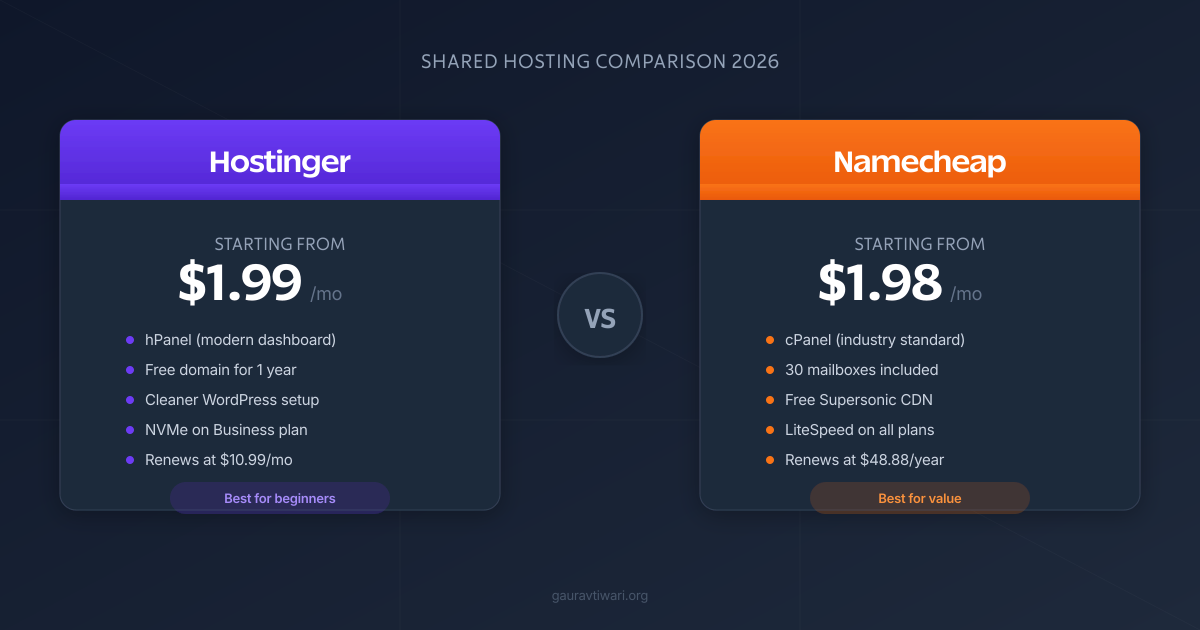
Price is important for most people, but hidden fees or renewal costs can surprise you. Here is a snapshot of basic shared hosting plans as of 2026.
| Provider | Starting Price (per month) | Renewal Price (per month) | Money-Back Guarantee |
|---|---|---|---|
| Hostinger | $2.49 | $4.99 | 30 days |
| Namecheap | $1.58 | $3.88 | 30 days |
Namecheap is cheaper for the first term. However, Hostinger’s renewal cost is slightly higher but comes with better performance. Both companies offer a 30-day money-back guarantee, so you can try risk-free.
Customer Support And Ease Of Use
Reliable support is essential, especially for beginners. Hostinger provides 24/7 live chat, a large knowledge base, and email support. Namecheap offers 24/7 live chat, ticket support, and a helpful knowledge base.
Many users report that Hostinger’s support responds faster, and their dashboard is easier for new users. Namecheap’s control panel is cPanel, which is standard but less modern than Hostinger’s custom interface.
Two Insights Beginners Miss
- Hostinger’s custom dashboard lets you install WordPress and manage domains with fewer clicks. Beginners often overlook how much time this saves.
- Namecheap’s domain management tools are better if you plan to buy and manage many domains, but their hosting dashboard is less intuitive.
Credit: www.hostingseekers.com
Security And Backup
Both providers include free SSL certificates and basic DDoS protection. Hostinger offers Cloudflare integration for extra security, while Namecheap provides domain privacy protection.
Hostinger’s backup system is more frequent on higher plans, giving extra peace of mind. Beginners sometimes forget that regular backups can save hours during a website emergency.
Real User Experience
Thousands of reviews show that both companies have satisfied users. Hostinger receives praise for its speed and easy dashboard. Namecheap is loved for its low prices and domain services.
One common mistake is ignoring renewal costs. Always check the price after the first year, as both companies raise prices after the initial term.
Pros And Cons Summary
Here is a quick summary to help you decide:
Hostinger Pros:
- Fast site loading
- Modern dashboard
- More frequent backups
- Global data centers
Hostinger Cons:
- Slightly higher renewal prices
- Limited domain management
Namecheap Pros:
- Lower starting price
- Great domain management
- Reliable support
Namecheap Cons:
- Slower speeds
- Less frequent backups
- Fewer global data centers
Which Hosting Is Better In 2026?
If you want speed, reliability, and easy management, Hostinger is the better choice. It’s perfect for blogs, business sites, and anyone who values performance. If you care most about low cost and domain management, Namecheap is ideal. It works well for small sites, portfolios, and those who buy many domains.
Before deciding, think about your needs. Do you want to grow your site quickly? Hostinger is best. Do you want to save money and manage domains? Namecheap fits.
Credit: gauravtiwari.org
Frequently Asked Questions
Is Hostinger Faster Than Namecheap?
Yes, Hostinger is usually faster because it uses LiteSpeed technology and has more global data centers. Sites load quicker, especially for visitors from different countries.
Can I Transfer My Domain To Hostinger Or Namecheap?
Both companies allow domain transfers. Namecheap is known for easy domain management, so many users move their domains there for convenience.
Which Hosting Is More Beginner-friendly?
Hostinger’s custom dashboard is easier for new users. Namecheap uses cPanel, which is common but less modern.
Are Backups Included In Both Hosting Plans?
Yes, but Hostinger offers more frequent backups, especially on premium plans. Namecheap includes twice-weekly backups for all plans.
Where Can I Find Real User Reviews?
You can check independent sites like Trustpilot for real user reviews and ratings.
Choosing between Hostinger and Namecheap depends on what matters most to you. Both are trusted companies in 2026, and either can work well if you match their strengths to your website goals. Always check the latest deals and features before making your final decision.
