
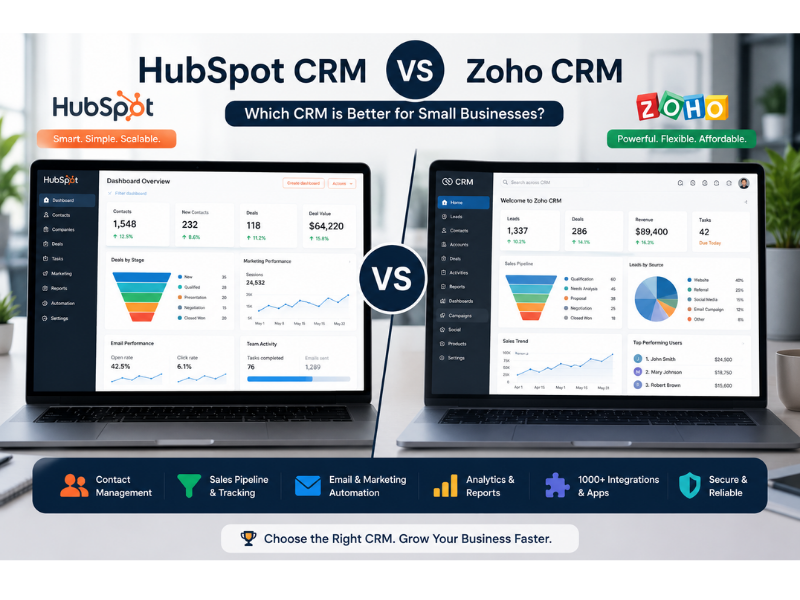
Introduction
Choosing the right CRM software can significantly impact how a small business manages leads, customer communication, sales tracking, and automation.
Two of the most popular CRM platforms in the market are HubSpot CRM and Zoho CRM.
Both platforms offer strong customer relationship management features, automation tools, lead tracking, integrations, and scalable business workflows.
But which one is actually better for small businesses?
The answer depends on your business size, budget, technical comfort level, and growth plans.
This detailed comparison helps you choose the right CRM solution.
Quick Comparison Overview
| Feature | HubSpot CRM | Zoho CRM |
|---|---|---|
| Ease of Use | Excellent | Good |
| Free Plan | Strong | Basic |
| Pricing | Higher | Affordable |
| Automation | Strong | Strong |
| Integrations | Excellent | Very Good |
| Reporting | Excellent | Good |
| Customization | Moderate | Excellent |
| Best For | Beginners | Budget businesses |
What Is HubSpot CRM?
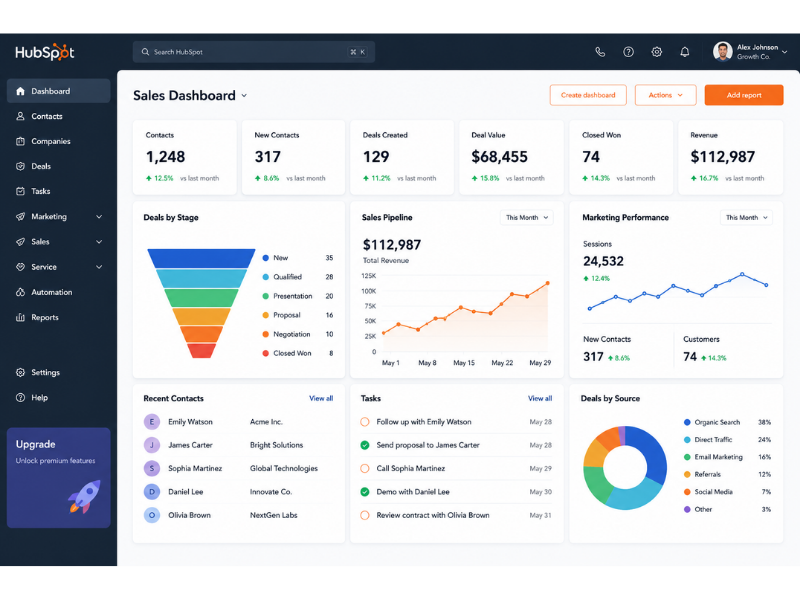
HubSpot CRM is a modern cloud-based customer relationship management platform.
It helps businesses:
• Manage contacts
• Track leads
• Build sales pipelines
• Automate tasks
• Track emails
• Create forms
• Improve customer engagement
HubSpot is known for simplicity and beginner-friendly design.
It is highly popular among startups, agencies, consultants, and service businesses.
What Is Zoho CRM?
Zoho CRM is a powerful customer relationship management platform and one of the strongest competitors to HubSpot CRM.
It helps businesses:
• Lead management
• Contact organization
• Deal tracking
• Workflow automation
• Multi-channel communication
• Reporting and analytics
Zoho is especially popular among budget-conscious businesses needing flexibility.
Ease of Use Comparison
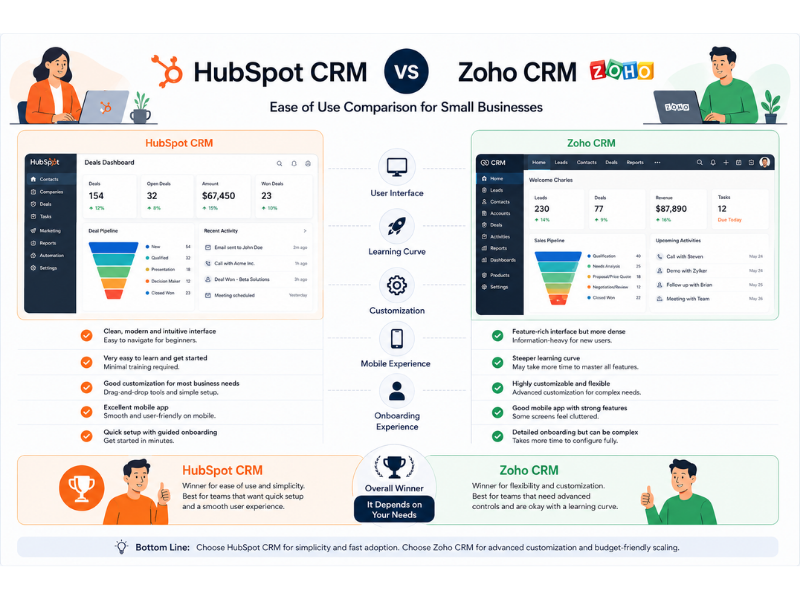
HubSpot CRM
HubSpot has one of the cleanest CRM interfaces.
Advantages:
• Simple dashboard
• Fast onboarding
• Minimal learning curve
• Beginner-friendly layout
Small business owners can start quickly.
Zoho CRM
Zoho is more feature-dense.
Advantages:
• Powerful controls
• Flexible workflows
• Advanced configuration
Downside:
Beginners may feel overwhelmed initially.
Winner
HubSpot CRM
Because usability matters greatly for small businesses.
Pricing Comparison
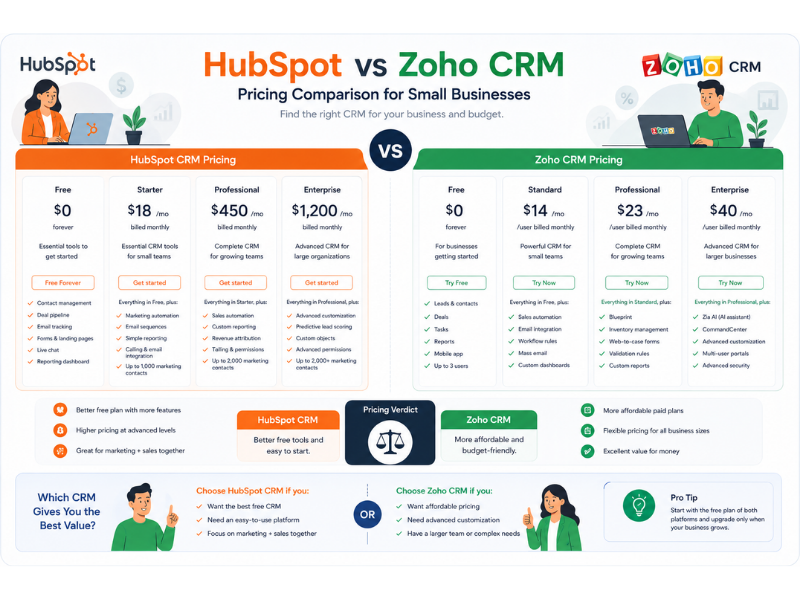
HubSpot Pricing
HubSpot offers:
Free plan available
Paid plans scale quickly depending on advanced features.
Pros:
• Great free tools
• Easy entry
Cons:
• Premium plans expensive
Zoho Pricing
Zoho offers affordable paid tiers.
Pros:
• Lower monthly cost
• Better pricing flexibility
• Strong value for money
Cons:
• Free version less impressive than HubSpot
Winner
Zoho CRM
Better affordability.
Free Plan Comparison
HubSpot Free Plan
Strong features:
• Contact management
• Deal pipeline
• Forms
• Email tracking
• Reporting
• Live chat
Excellent for startups.
Zoho Free Plan
Includes:
• Lead management
• Contacts
• Deals
• Tasks
More limited compared to HubSpot.
Winner
HubSpot CRM
Much stronger free offering.
Features Comparison
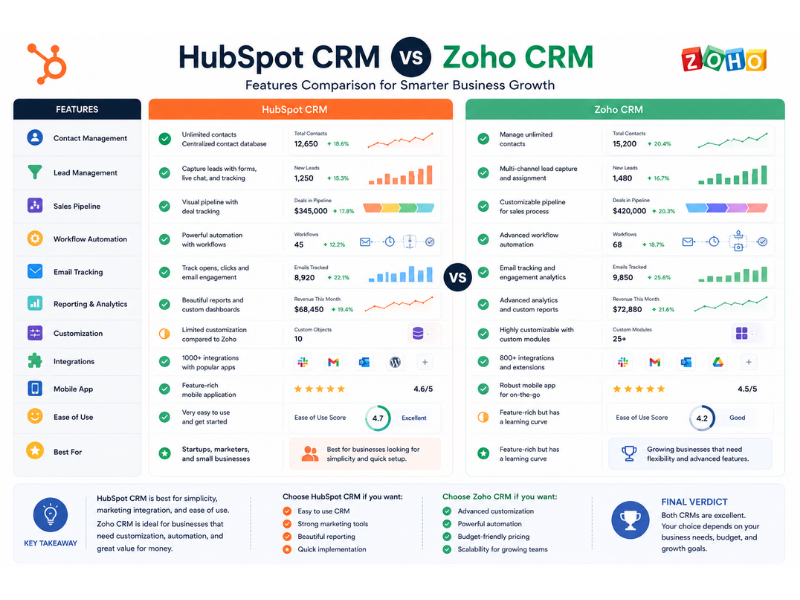
Lead Management
Both perform well.
HubSpot:
Cleaner workflow
Zoho:
More configurable
Winner:
Draw
Sales Pipeline
HubSpot:
Very visual pipeline
Zoho:
Flexible pipeline customization
Winner:
Draw
Automation
HubSpot:
Good automation tools
Zoho:
Excellent workflow automation
Winner:
Zoho CRM
Reporting
HubSpot:
Clean reporting
Zoho:
Capable but less intuitive
Winner:
HubSpot
Customization
HubSpot:
Moderate customization
Zoho:
Highly flexible
Winner:
Zoho
Integrations
HubSpot:
Large integration ecosystem
Zoho:
Strong ecosystem too
Winner:
HubSpot
CRM UI Experience
HubSpot
Feels modern and polished.
Best for:
• Beginners
• Non-technical users
Zoho
Feels functional but denser.
Best for:
• Experienced users
• Businesses needing control
Best CRM for Different Business Types
Startups
Winner:
HubSpot CRM
Reason:
Strong free plan + simplicity
Budget Businesses
Winner:
Zoho CRM
Reason:
Lower paid pricing
Agencies
Winner:
HubSpot
Reason:
Marketing ecosystem
Sales Teams
Winner:
Zoho CRM
Reason:
Automation flexibility
Consultants
Winner:
HubSpot
Reason:
Ease of management
Pros and Cons
HubSpot CRM Pros
• Excellent UI
• Powerful free plan
• Great reporting
• Easy onboarding
• Strong integrations
HubSpot Cons
• Expensive upgrades
• Limited deep customization
Zoho CRM Pros
• Affordable pricing
• Strong automation
• Flexible customization
• Scalable options
Zoho Cons
• Steeper learning curve
• UI less beginner-friendly
Performance Comparison
Both are cloud-based.
HubSpot generally feels smoother visually.
Zoho offers more configuration depth.
Performance winner:
Depends on workflow preference.
CRM for WordPress Users
WordPress businesses often need CRM integration.
HubSpot
Works well with:
• WPForms
• HubSpot plugin
• Forms
• Email capture
Zoho
Supports:
• Form integrations
• Zapier workflows
• API connectivity
Winner:
HubSpot (easier setup)
Which CRM Scales Better?
HubSpot
Scales nicely but becomes costly.
Zoho
Scales affordably.
Winner:
Zoho CRM
Final Score Comparison
| Category | Winner |
|---|---|
| Ease of Use | HubSpot |
| Free Plan | HubSpot |
| Pricing | Zoho |
| Automation | Zoho |
| Reporting | HubSpot |
| Customization | Zoho |
| Integrations | HubSpot |
Final result:
HubSpot: 4
Zoho: 3
Final Verdict
Choose HubSpot CRM if:
• You are a beginner
• You want the best free CRM
• Ease of use matters
• You want quick setup
Choose Zoho CRM if:
• Budget matters
• You need advanced automation
• You want customization
• Your team can handle complexity
Best Recommendation for Small Businesses
For most small businesses:
HubSpot CRM wins for simplicity and free features.
For budget-conscious growing businesses:
Zoho CRM is better value.
