Introduction
Managing business finances manually becomes difficult as a company grows.
Invoices, expenses, taxes, payroll, cash flow tracking, and financial reporting can quickly become overwhelming.
This is where accounting software becomes essential.
The right accounting software helps small businesses stay organized, save time, reduce human errors, and make smarter financial decisions.
But with so many options available, choosing the right platform can be confusing.
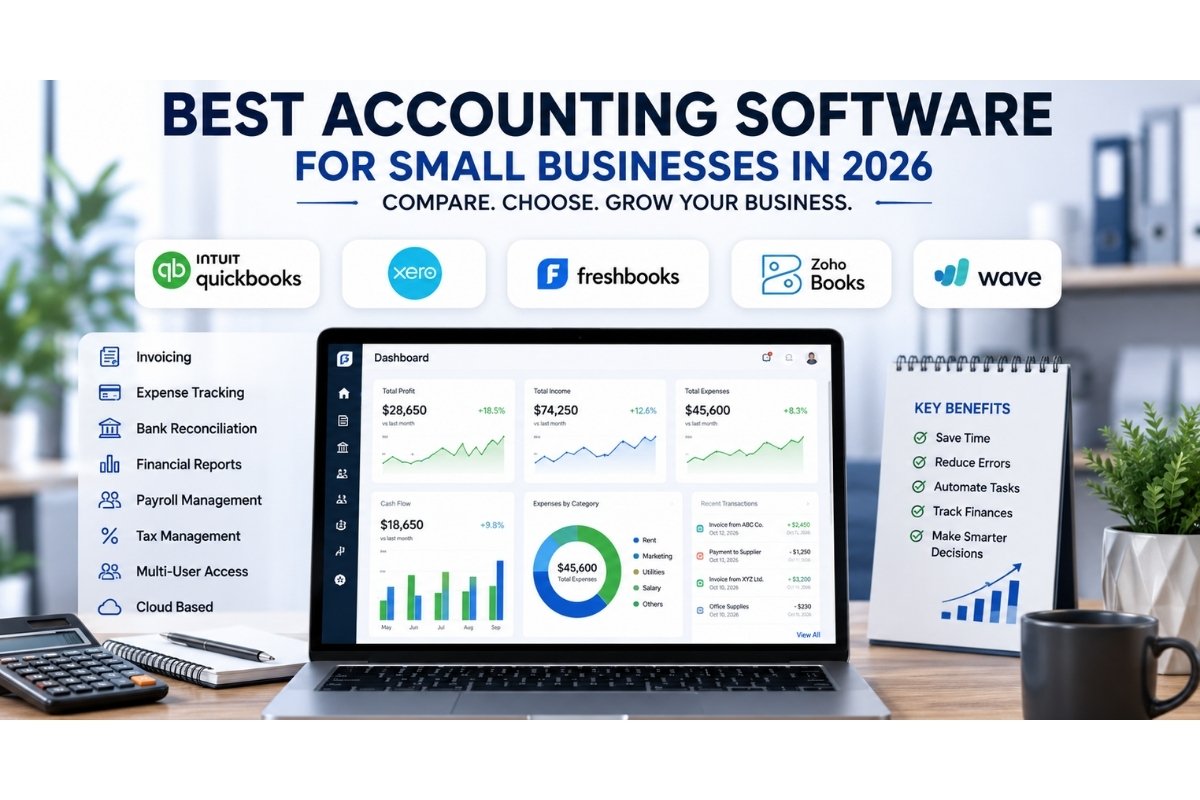
This guide compares the best accounting software for small businesses in 2026.
Quick Comparison Overview
| Software | Best For | Starting Price | Free Plan |
|---|---|---|---|
| QuickBooks | Overall best | Paid | No |
| Xero | Growing businesses | Paid | No |
| FreshBooks | Freelancers | Paid | No |
| Zoho Books | Budget businesses | Paid | Trial |
| Wave | Free accounting | Free | Yes |
What Makes Good Accounting Software?
A quality accounting solution should provide:
• Expense tracking
• Invoicing
• Financial reporting
• Tax management
• Payroll support
• Bank reconciliation
• Cash flow monitoring
• Multi-user access
• Cloud access
• Automation features
The best solution depends on business size and workflow.
1. QuickBooks
Best Overall Accounting Software
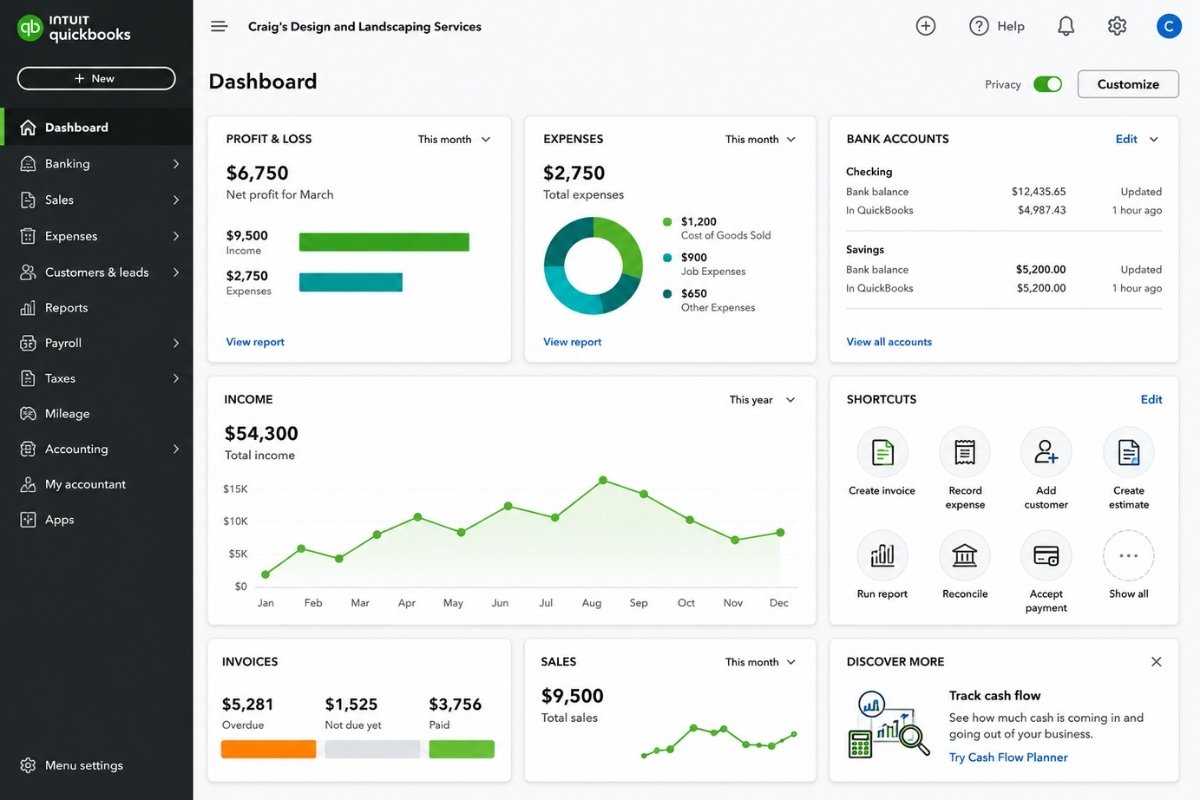
QuickBooks remains one of the most popular accounting platforms for small businesses.
Key features:
• Invoicing
• Expense tracking
• Tax tools
• Payroll integration
• Bank sync
• Financial reporting
• Mobile app
Pros:
✔ Strong ecosystem
✔ Easy automation
✔ Good reporting
✔ Accountant-friendly
Cons:
✘ Higher pricing
✘ Can feel complex for beginners
Best for:
Growing businesses needing advanced accounting.
2. Xero
Best for Growing Businesses
Xero is a powerful cloud accounting solution.
Features:
• Unlimited users
• Bank reconciliation
• Expense tracking
• Inventory management
• Invoicing
• Reporting tools
Pros:
✔ Modern interface
✔ Unlimited users
✔ Strong integrations
✔ Good scalability
Cons:
✘ Learning curve
✘ Payroll availability varies
Best for:
Businesses planning long-term growth.
3. FreshBooks
Best for Freelancers and Service Businesses
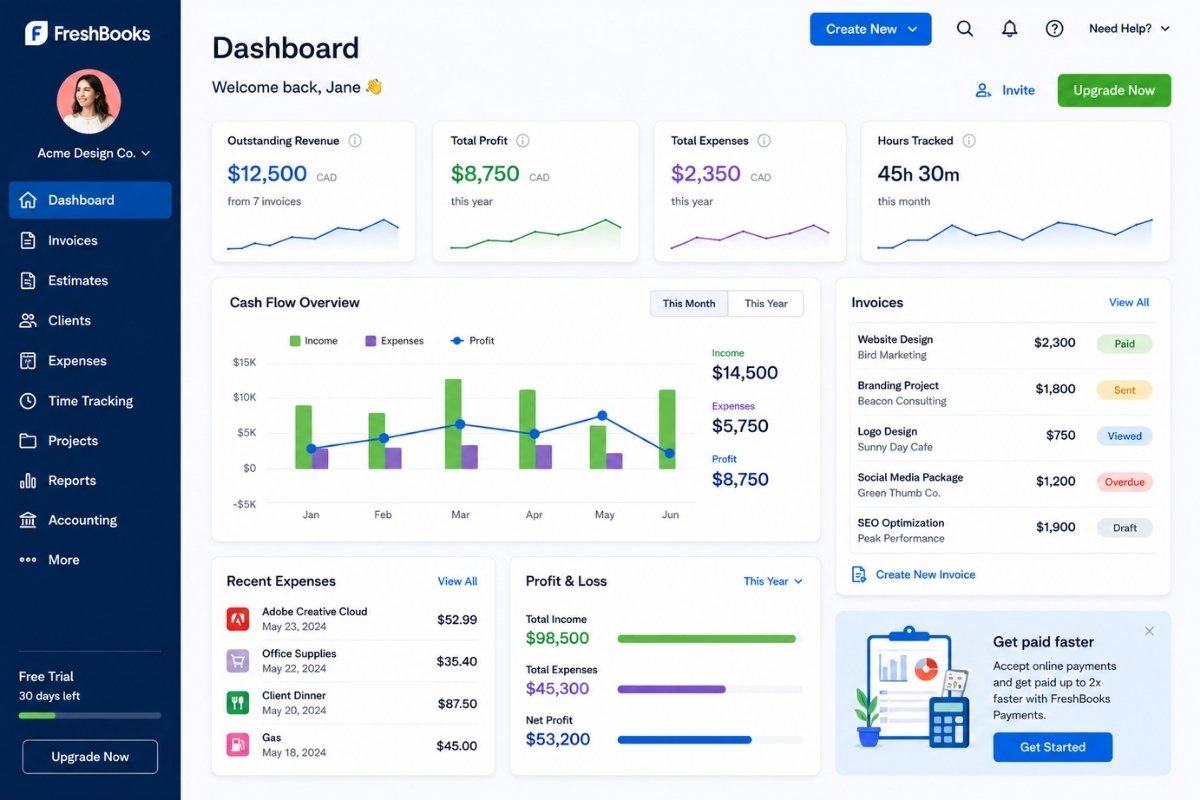
FreshBooks focuses on simplicity.
Features:
• Invoicing
• Time tracking
• Expense management
• Estimates
• Payment processing
• Reporting
Pros:
✔ Beginner-friendly
✔ Clean interface
✔ Great invoicing
✔ Ideal for freelancers
Cons:
✘ Less advanced accounting depth
✘ Higher pricing for scaling teams
Best for:
Consultants, freelancers, agencies.
4. Zoho Books
Best Budget-Friendly Option
Zoho Books offers excellent value.
Features:
• Invoicing
• Expense tracking
• Automation
• Tax handling
• Inventory support
• Reporting
Pros:
✔ Affordable pricing
✔ Automation tools
✔ Great ecosystem integration
✔ Mobile-friendly
Cons:
✘ Smaller ecosystem than QuickBooks
✘ Less accountant familiarity in some regions
Best for:
Budget-conscious small businesses.
5. Wave Accounting
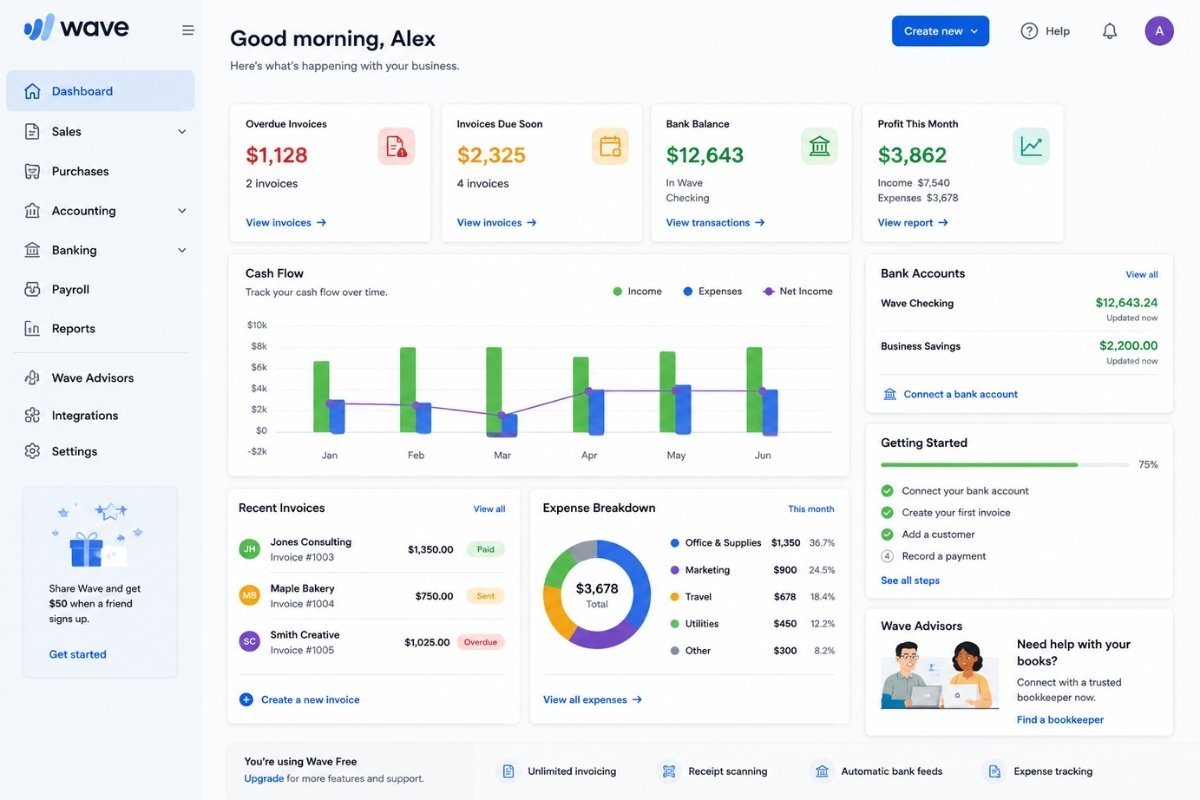
Best Free Accounting Software
Wave is excellent for startups.
Features:
• Free accounting
• Invoicing
• Expense tracking
• Receipt scanning
• Reporting
Pros:
✔ Free core accounting
✔ Easy setup
✔ Great for startups
Cons:
✘ Limited advanced features
✘ Fewer integrations
Best for:
New businesses with tight budgets.
Detailed Feature Comparison
| Feature | QuickBooks | Xero | FreshBooks | Zoho Books | Wave |
|---|---|---|---|---|---|
| Invoicing | Excellent | Excellent | Excellent | Excellent | Good |
| Expense Tracking | Excellent | Excellent | Good | Excellent | Good |
| Payroll | Excellent | Moderate | Moderate | Moderate | Limited |
| Reporting | Excellent | Strong | Moderate | Strong | Basic |
| Automation | Strong | Strong | Moderate | Strong | Basic |
| Inventory | Strong | Good | Limited | Good | Limited |
| Mobile App | Excellent | Excellent | Good | Good | Good |
Pricing Comparison
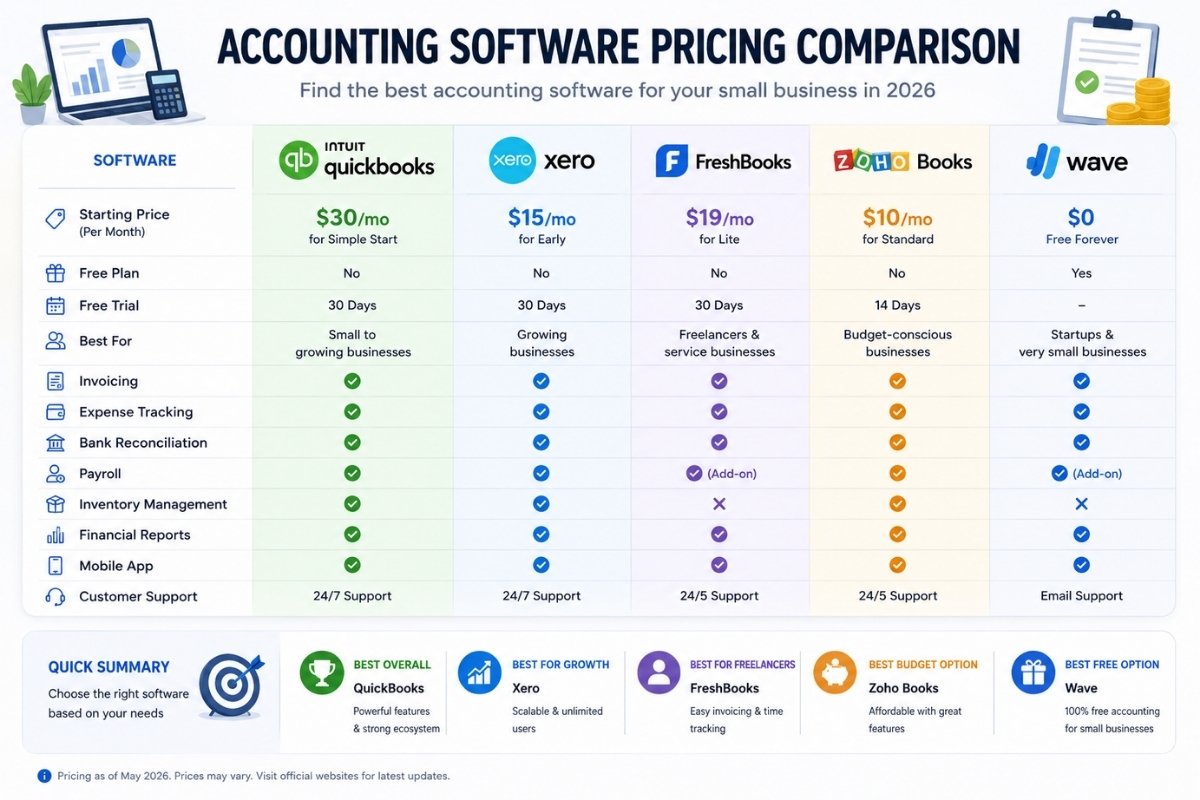
QuickBooks
Premium pricing
Best for advanced accounting
Xero
Mid-to-premium pricing
Strong value
FreshBooks
Mid pricing
Best for service professionals
Zoho Books
Affordable pricing
Excellent value
Wave
Free
Best for startups
Free vs Paid Accounting Software
Free Software
Advantages:
• No upfront cost
• Great for startups
• Basic accounting coverage
Limitations:
• Limited automation
• Fewer integrations
• Basic reporting
Paid Software
Advantages:
• Better automation
• Advanced reports
• Payroll support
• Growth scalability
Which Accounting Software Is Best?
Best for Startups
Winner:
Wave
Reason:
Free and simple.
Best for Growing Businesses
Winner:
Xero
Reason:
Scalable cloud accounting.
Best for Freelancers
Winner:
FreshBooks
Reason:
Simple invoicing workflow.
Best Overall
Winner:
QuickBooks
Reason:
Comprehensive accounting features.
Best Budget Option
Winner:
Zoho Books
Reason:
Strong value for money.
Accounting Software Benefits
Good accounting software helps businesses:
• Save time
• Reduce manual errors
• Improve tax preparation
• Monitor cash flow
• Automate recurring tasks
• Generate financial reports
• Improve decision-making
Common Challenges
Businesses may face:
• Learning curves
• Migration complexity
• Monthly costs
• Training needs
• Integration setup
Choosing the right tool reduces these issues.
Cloud vs Desktop Accounting Software
Cloud software benefits:
• Access anywhere
• Automatic updates
• Team collaboration
• Better scalability
Desktop software benefits:
• Local control
• Traditional workflow familiarity
Cloud solutions dominate in 2026.
Final Comparison Score
| Category | Winner |
|---|---|
| Best Overall | QuickBooks |
| Best Free | Wave |
| Best Growth | Xero |
| Best Freelancers | FreshBooks |
| Best Budget | Zoho Books |
Final Verdict
Choose QuickBooks if:
• You need powerful accounting tools
• Reporting matters
• Your accountant prefers it
Choose Xero if:
• Growth matters
• Cloud workflows matter
Choose FreshBooks if:
• You’re a freelancer
• Simplicity matters
Choose Zoho Books if:
• Budget matters
• Automation matters
Choose Wave if:
• You need free accounting software
Best Recommendation
For most small businesses:
QuickBooks wins overall.
For startups with low budget:
Wave is excellent.
For businesses wanting better affordability:
Zoho Books is strong.
Looking for business productivity tools? Read our guide on Google Workspace vs Microsoft 365.
If you’re exploring business software systems, check our comparison on CRM vs ERP.
Official software pages:
