
Introduction
Choosing the right software solution is one of the most critical decisions for any business in 2026. Whether you are running a startup, small business, or scaling company, the choice between SaaS and custom software can directly impact your efficiency, cost, and long-term growth.
Many businesses start with SaaS tools due to their simplicity and affordability. However, as operations grow more complex, custom software becomes a serious consideration.
In this guide, we will break down SaaS vs custom software in detail, helping you understand which option is best suited for your business needs.
What is SaaS (Software as a Service)

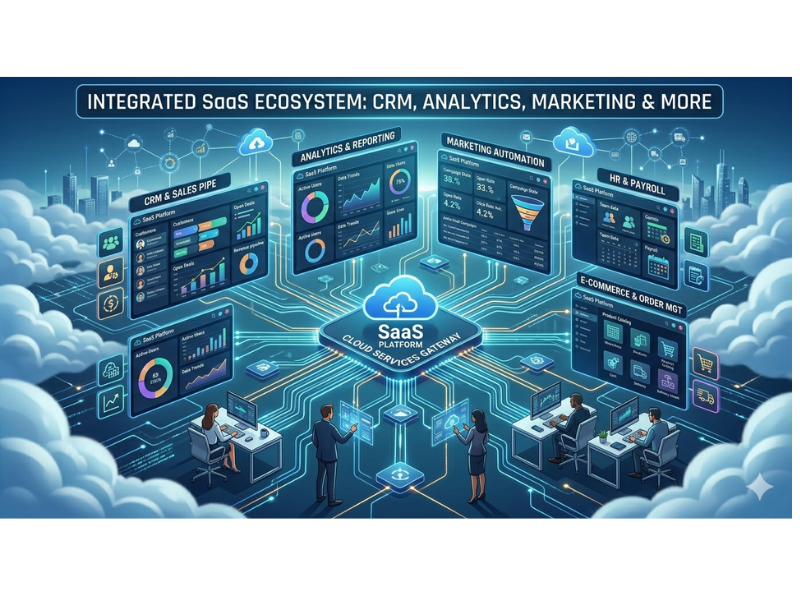
SaaS is a cloud-based software model where users access applications through the internet. Instead of purchasing software outright, businesses pay a monthly or yearly subscription.
SaaS tools are managed by third-party providers, meaning you do not have to worry about maintenance, updates, or infrastructure.
Common Examples
• CRM platforms
• Email marketing tools
• Project management software
• Accounting systems
Key Characteristics
• Cloud-based access
• Subscription pricing
• Automatic updates
• Multi-user accessibility
SaaS is widely used because it allows businesses to get started quickly without technical complexity.
What is Custom Software
Custom software is developed specifically for a business based on its unique requirements. It is built from scratch and tailored to match workflows, processes, and goals.
Unlike SaaS, custom software gives full control over features, integrations, and scalability.
Key Characteristics
• Fully customizable
• Built for specific business needs
• Greater flexibility
• Full ownership
Custom software is commonly used by businesses that require advanced functionality or have unique operational processes.
SaaS vs Custom Software: Core Differences
Understanding the differences between SaaS and custom software is essential before making a decision.
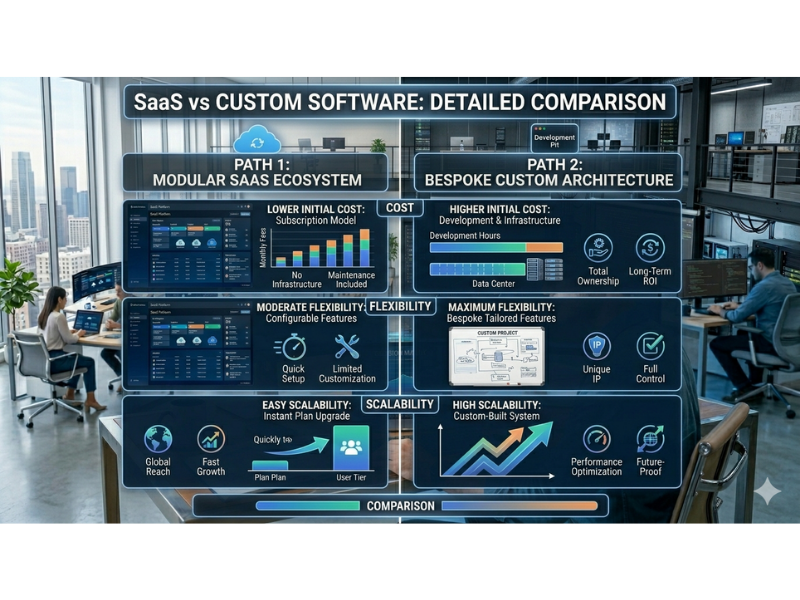
Cost
• SaaS requires low upfront cost but ongoing subscription fees
• Custom software requires high initial investment but lower long-term recurring cost
Setup Time
• SaaS can be used instantly
• Custom software takes weeks or months to develop
Customization
• SaaS offers limited customization
• Custom software is fully tailored
Maintenance
• SaaS providers handle maintenance and updates
• Custom software requires ongoing technical support
Scalability
• SaaS scales easily within its ecosystem
• Custom software scales based on how it is built
Advantages of SaaS
SaaS solutions are ideal for businesses that want speed and simplicity.
• Quick implementation
• Lower initial investment
• No technical maintenance required
• Easy to use and manage
• Continuous updates and improvements
SaaS is especially useful for startups and small businesses that need to move fast without large budgets.
Limitations of SaaS
While SaaS is convenient, it has certain limitations.
• Limited customization
• Recurring subscription costs
• Dependency on third-party providers
• Integration limitations
• Data control concerns
As businesses grow, these limitations can become more noticeable.
Advantages of Custom Software
Custom software provides long-term flexibility and control.
• Tailored to exact business needs
• Better integration with internal systems
• Full control over features and updates
• Scalable for complex operations
• Competitive advantage
Businesses with unique workflows or advanced requirements benefit the most from custom solutions.
Limitations of Custom Software
Custom software also comes with challenges.
• High initial development cost
• Longer development time
• Requires ongoing maintenance
• Needs technical expertise
It is not always the best option for small businesses with limited resources.
When Should You Choose SaaS
SaaS is the right choice if:
• You need a quick and ready-to-use solution
• Your budget is limited
• Your business processes are standard
• You want minimal technical involvement
SaaS allows you to focus on your business instead of managing software.
When Should You Choose Custom Software
Custom software is the better option if:
• Your business has unique workflows
• You need full control over features
• You want long-term scalability
• Your operations are complex
It becomes a strategic investment as your business grows.
Cost Comparison: SaaS vs Custom Software
The cost difference between SaaS and custom software is one of the biggest deciding factors.
SaaS works on a subscription model, which means lower upfront cost but continuous payments over time.
Custom software requires a significant initial investment but can be more cost-effective in the long run, especially for growing businesses.
Businesses should evaluate both short-term affordability and long-term value before making a decision.
Scalability and Growth Considerations
Scalability is crucial for any business planning long-term growth.
SaaS platforms allow quick scaling but are limited by the provider’s capabilities.
Custom software offers unlimited scalability but depends on proper planning and development.
Choosing the right option depends on how fast your business is expected to grow and how complex your future needs will be.
Verdict
SaaS is the best choice for most small businesses due to its affordability, ease of use, and quick setup. It allows businesses to start fast and scale without technical complexity.
However, as your business grows and requires more control, customization, and advanced features, custom software becomes a more powerful and strategic investment.
The right decision depends on your business goals, budget, and long-term vision.
