Choosing the right automation tool can save your business time, reduce errors, and unlock new possibilities for productivity. In 2026, the battle between Zapier and Make (formerly Integromat) is more intense than ever. Both platforms help users connect apps and automate tasks without coding, but their approaches, pricing, and strengths are different. If you’re struggling to decide which one fits your needs, this side-by-side comparison will give you a clear answer.
What Are Zapier And Make?
Zapier is a well-known automation platform that lets you connect thousands of apps such as Gmail, Slack, Salesforce, and more. You create “Zaps,” which are workflows triggered by events (like receiving an email) to automate actions across different services.
Make is another powerful automation tool, recognized for its visual, drag-and-drop interface and advanced logic. It allows users to build complex workflows, called “scenarios,” with more flexibility and detailed control over data.
Both tools are cloud-based and require no coding, making them accessible for non-technical users.
Core Features Compared
Here’s a quick overview of what each platform offers in 2026:
| Feature | Zapier | Make |
|---|---|---|
| Supported Apps | 6,000+ | 2,000+ |
| Interface | Form-based, simple | Visual, drag-and-drop |
| Automation Complexity | Basic to moderate | Moderate to advanced |
| Data Handling | Simple fields | Deep data mapping |
| AI Integration | Yes | Yes |
Non-obvious insight: Make’s visual builder is not just for looks; it helps users spot logic errors or broken steps faster than Zapier’s linear builder.
Pricing And Value
Automation tools only make sense if they fit your budget. Here’s a side-by-side comparison of their most popular 2026 plans:
| Plan | Zapier (Monthly) | Make (Monthly) |
|---|---|---|
| Free | 100 tasks, single-step Zaps | 1,000 operations, 2 active scenarios |
| Starter | $29.99 for 750 tasks | $10 for 10,000 operations |
| Professional | $73.50 for 2,000 tasks | $34 for 40,000 operations |
| Enterprise | Custom | Custom |
Key difference: Zapier charges by “tasks” (every action counts as a task), while Make charges by “operations” (more detailed, sometimes multiple operations per step). This can make Make much cheaper for complex workflows.
Ease Of Use
For most users, Zapier feels easier to learn. Its form-based builder walks you through step by step. If you want to automate simple tasks—like saving Gmail attachments to Google Drive—Zapier’s templates and interface make it quick.
Make is more visual and flexible. You can branch, loop, and use routers (like “if/else” logic), which is harder to do on Zapier. However, Make’s interface might feel overwhelming to beginners. Once you understand it, though, you can build much more powerful automations.
Practical tip: If you want to automate multi-step processes or need to transform data between steps, Make is often the better choice—even if the learning curve is steeper.
App Integrations And Ecosystem
Zapier supports more than 6,000 apps in 2026, making it the broadest automation platform for integrations. If you rely on less popular tools, Zapier is more likely to have them.
Make, with over 2,000 apps, focuses on depth. Its integrations often allow more actions and options within each app. For example, you might be able to update multiple fields in a CRM or pull detailed analytics data in one scenario.
Example: If you need to connect a rare app, Zapier is more likely to support it. But if you need to perform several actions within Google Sheets, Make’s integration will let you do more without extra steps.
Workflow Complexity And Flexibility
Here’s where Make shines. In 2026, Make allows you to:
- Branch automations using routers (like “if/then” logic)
- Use variables, functions, and built-in data transformation
- Loop through lists or repeating data
Zapier has improved its multi-step Zaps and offers conditional logic, but it still can’t match Make’s flexibility for complex, custom workflows.
Non-obvious insight: Many users underestimate how often they need to filter, split, or reformat data. Make’s built-in tools save hours compared to Zapier, where you might need extra apps or code.

Credit: aiwiner.com
Customer Support And Community
Both platforms offer live chat, documentation, and active forums. Zapier’s help resources are more beginner-focused, while Make’s community often shares advanced scenarios and templates.
In user surveys, Zapier’s support scores slightly higher for fast responses. Make’s support is praised for solving complex issues but may take longer.
Security And Reliability
Both Zapier and Make use encryption, two-factor authentication, and strong security practices in 2026. They comply with regulations like GDPR and SOC 2.
Zapier has a longer public track record, but Make has not reported any major incidents. Both tools offer detailed logs and controls for enterprise clients.
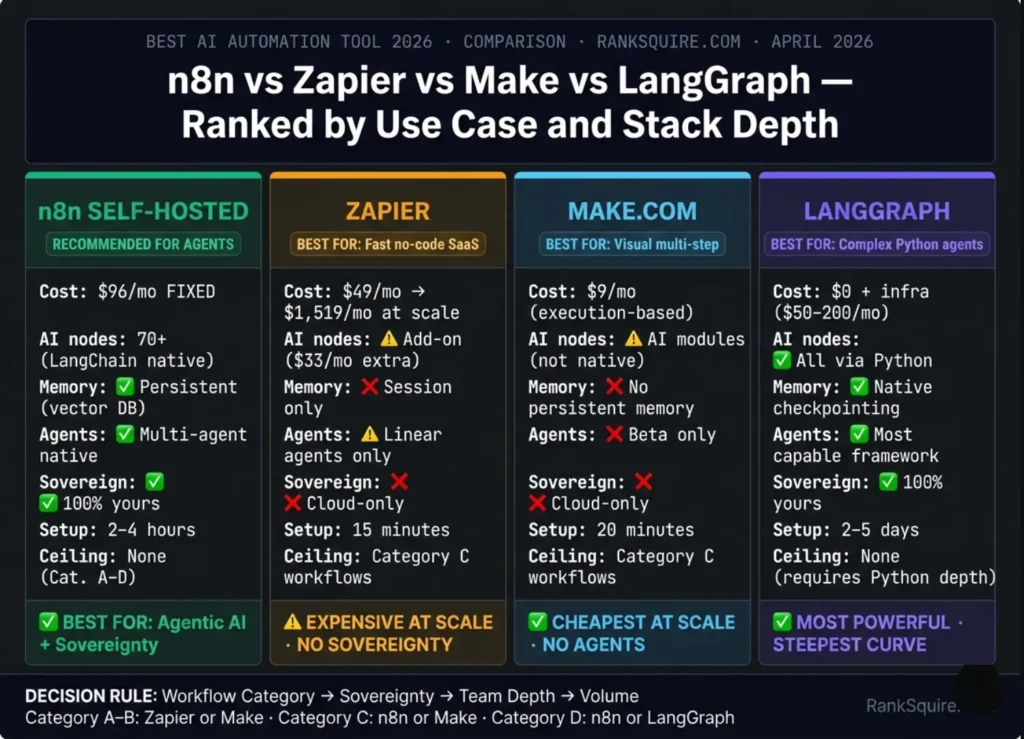
Credit: ranksquire.com
Choosing The Right Tool: Key Scenarios
Here’s a quick guide to help you decide:
- If you want simplicity and speed: Choose Zapier.
- If you need the most integrations: Choose Zapier.
- If you want advanced logic and data handling: Choose Make.
- If you want the best value for complex automations: Choose Make.
- If you’re new to automation: Start with Zapier, then consider Make as your needs grow.
Common mistake: Many users stick with Zapier out of habit, even when their workflows become too complex. Review your automations yearly—sometimes switching saves money and time.
Frequently Asked Questions
What Is The Main Difference Between Zapier And Make?
The main difference is that Zapier is simpler and supports more apps, while Make offers a visual builder and greater power for complex workflows.
Which Platform Is Cheaper For Advanced Automations?
Make is usually cheaper for advanced or multi-step automations, thanks to its pricing based on operations, not tasks.
Can I Use Both Zapier And Make Together?
Yes, some businesses use both tools—Zapier for basic tasks and Make for complex workflows. Just make sure to avoid overlapping automations that could cause conflicts.
Is My Data Safe With Zapier And Make?
Both platforms use strong encryption and comply with major standards like GDPR and SOC 2. For more details, check their official security documentation or see the Zapier Security Guide.
Which Tool Is Better For Non-coders?
Zapier is better for non-coders or beginners, thanks to its user-friendly interface. However, Make is also no-code, just more advanced.
The choice between Zapier and Make in 2026 depends on your needs. For most simple automations and widest app support, Zapier is the leader. For complex, flexible workflows and better value as your needs grow, Make stands out. Both tools continue to innovate, so keep an eye on updates and always review your automation strategy as your business changes.
Credit: www.venastechnology.com
