
Introduction
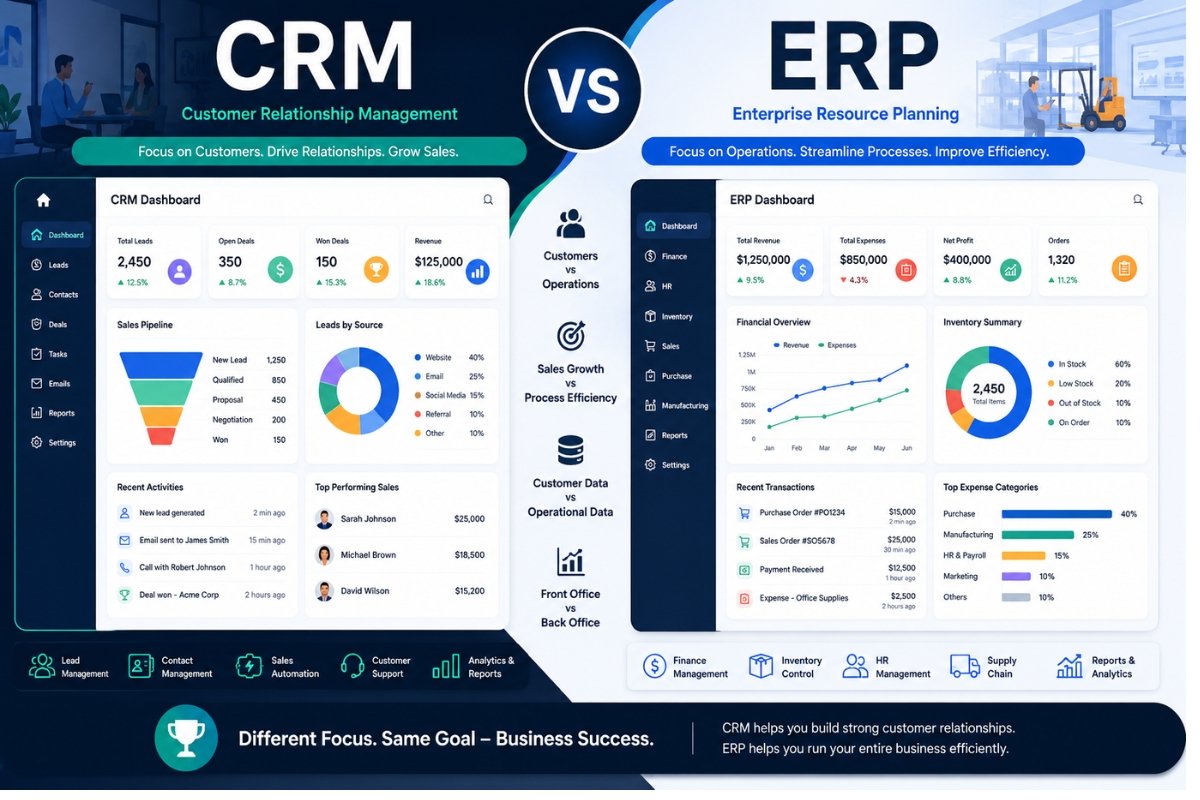
Businesses often hear about CRM and ERP software, especially when trying to improve operations, sales, customer management, and workflow automation.
Because both systems help businesses become more organized and efficient, many people assume CRM and ERP are the same.
They are not.
CRM and ERP serve different business purposes.
CRM focuses mainly on managing customers, leads, communication, and sales relationships.
ERP focuses on managing internal business operations like finance, inventory, procurement, HR, manufacturing, and operations.
Understanding the difference helps businesses choose the right software and avoid costly mistakes.
This guide explains CRM vs ERP in simple terms.
What Is CRM?
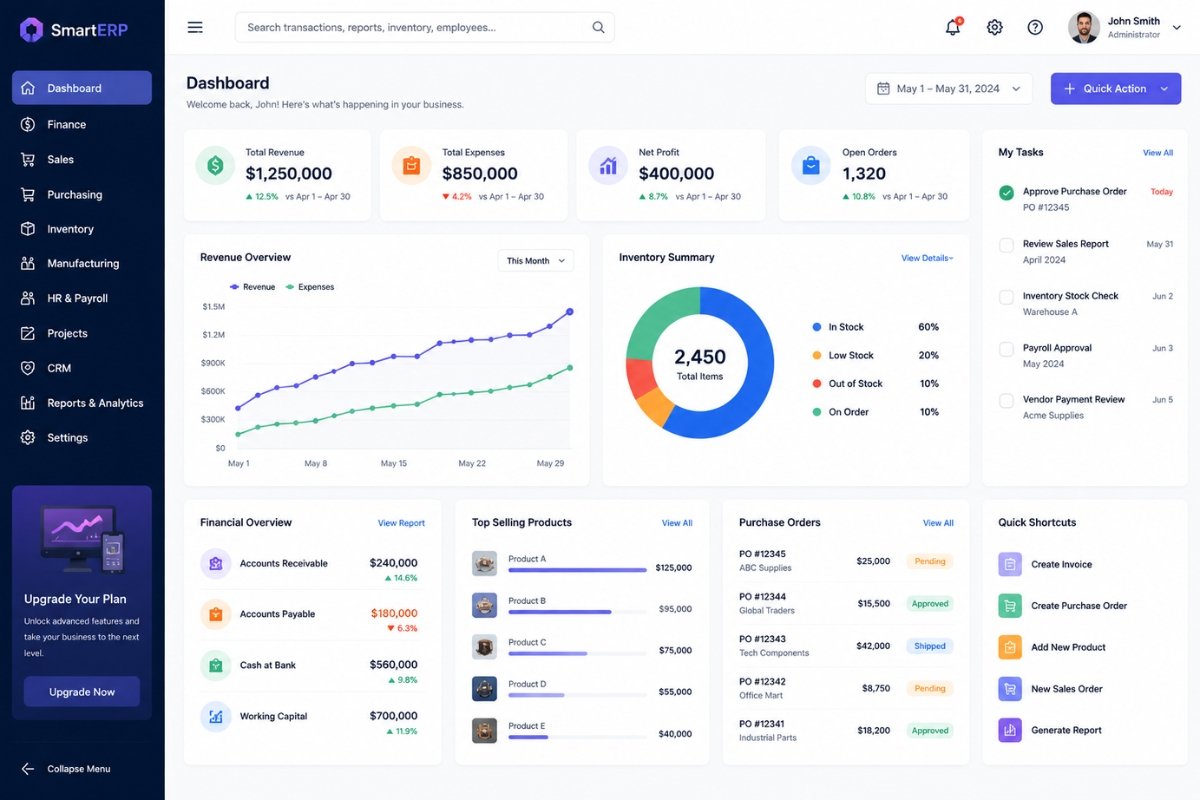
CRM stands for Customer Relationship Management.
CRM software helps businesses manage customer interactions and sales activities.
Main CRM functions:
• Lead management
• Contact management
• Sales pipeline tracking
• Follow-up automation
• Email communication
• Customer support history
• Reporting and analytics
CRM is mainly customer-facing.
Examples of CRM software:
• HubSpot CRM
• Zoho CRM
• Salesforce CRM
• Freshsales
• Pipedrive
What Is ERP?
ERP stands for Enterprise Resource Planning.
ERP software helps businesses manage internal operational processes.
Main ERP functions:
• Inventory management
• Accounting
• Procurement
• Supply chain management
• Human resources
• Payroll
• Manufacturing planning
• Financial reporting
ERP is mainly operational and internal.
Popular ERP platforms:
• SAP
• Oracle ERP
• Microsoft Dynamics 365
• Odoo ERP
• NetSuite
Quick CRM vs ERP Comparison
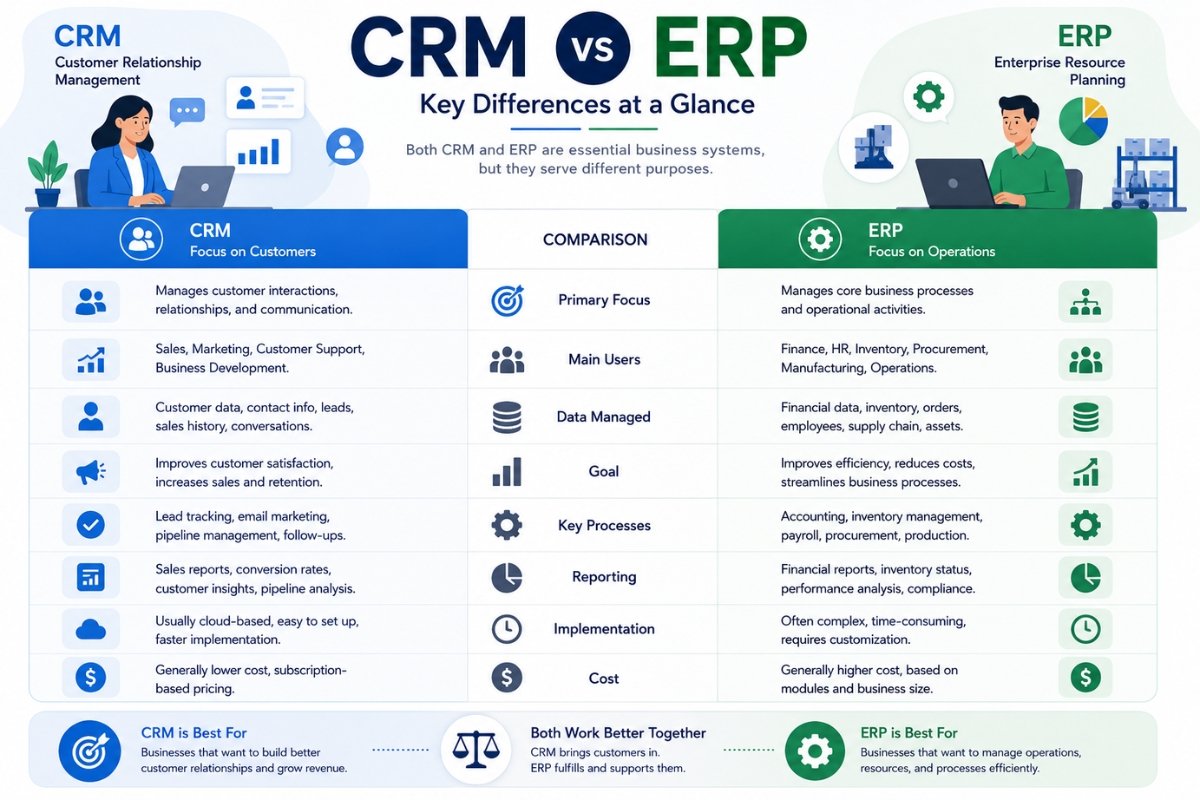
| Feature | CRM | ERP |
|---|---|---|
| Main Focus | Customer management | Business operations |
| Users | Sales, marketing, support | Finance, HR, operations |
| Goal | Increase sales & retention | Improve efficiency |
| Data Type | Customer data | Operational data |
| Department Focus | Front office | Back office |
| Automation | Sales/customer workflows | Business process workflows |
| Best For | Customer growth | Operational control |
CRM vs ERP: Core Differences
1. Primary Purpose
CRM
CRM focuses on customer relationships.
Its main goal is:
• Managing leads
• Tracking customer conversations
• Improving sales performance
• Increasing retention
ERP
ERP focuses on internal operations.
Its goal:
• Process efficiency
• Financial control
• Inventory accuracy
• Workflow optimization
Difference
CRM = customer-facing growth tool
ERP = internal business management tool
2. Business Departments That Use Them
CRM Users
Common CRM users:
• Sales teams
• Marketing teams
• Customer support
• Business development teams
ERP Users
Common ERP users:
• Finance teams
• Procurement
• Inventory teams
• HR departments
• Operations managers
• Manufacturing teams
Difference
CRM helps front-office teams.
ERP helps back-office teams.
3. Data Management
CRM Stores
CRM manages:
• Customer names
• Emails
• Phone numbers
• Sales history
• Support conversations
• Marketing engagement
ERP Stores
ERP manages:
• Financial records
• Purchase orders
• Supplier information
• Payroll data
• Inventory counts
• Product operations
Difference
CRM manages customer relationships.
ERP manages business operations.
4. Workflow Focus
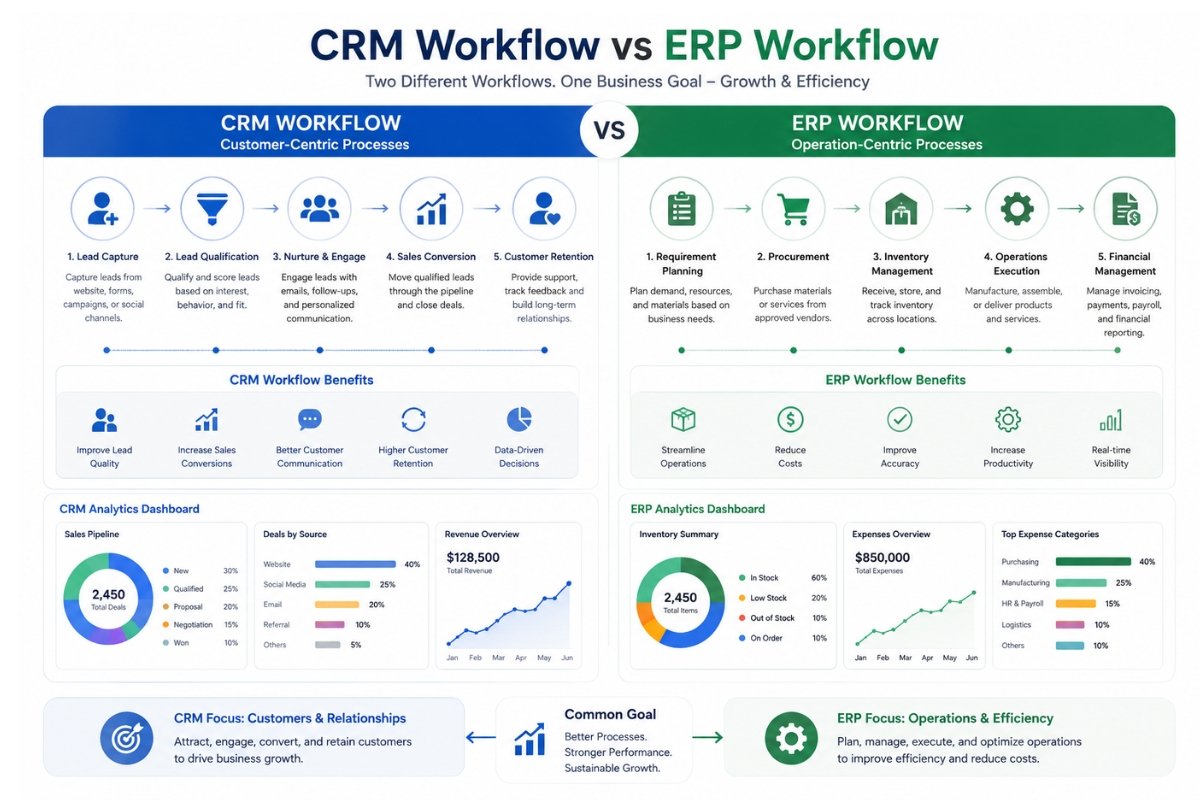
CRM Workflows
Examples:
• Lead capture
• Follow-up reminders
• Email automation
• Sales pipeline movement
• Customer communication
ERP Workflows
Examples:
• Purchase approval
• Inventory updates
• Invoice generation
• Payroll processing
• Manufacturing scheduling
Difference
CRM improves revenue workflows.
ERP improves operational workflows.
5. Reporting and Analytics
CRM Reports
CRM typically tracks:
• Lead conversion rates
• Sales performance
• Email engagement
• Customer retention
• Sales forecasting
ERP Reports
ERP tracks:
• Revenue performance
• Expenses
• Inventory health
• Supplier performance
• Profit margins
• Resource utilization
Difference
CRM = customer insights
ERP = operational insights
6. Business Size Suitability
CRM
Useful for:
• Startups
• Small businesses
• Agencies
• Service businesses
• Sales teams
ERP
Best for:
• Growing businesses
• Product companies
• Manufacturers
• Retail operations
• Larger organizations
CRM vs ERP Use Cases
When You Need CRM
Choose CRM if your business struggles with:
• Lost leads
• Poor follow-ups
• Weak customer organization
• Sales tracking issues
• Email management problems
Example:
A digital agency managing leads from website forms.
CRM is ideal.
When You Need ERP
Choose ERP if your business struggles with:
• Inventory problems
• Accounting complexity
• Payroll workflows
• Supplier management
• Multi-department operations
Example:
A product distribution company.
ERP is ideal.
Can Businesses Use Both?
Yes.
Many businesses use both CRM and ERP.
Example:
CRM handles:
• Leads
• Customers
• Sales communication
ERP handles:
• Orders
• Billing
• Inventory
• Accounting
This combination creates better operational efficiency.
CRM vs ERP Advantages
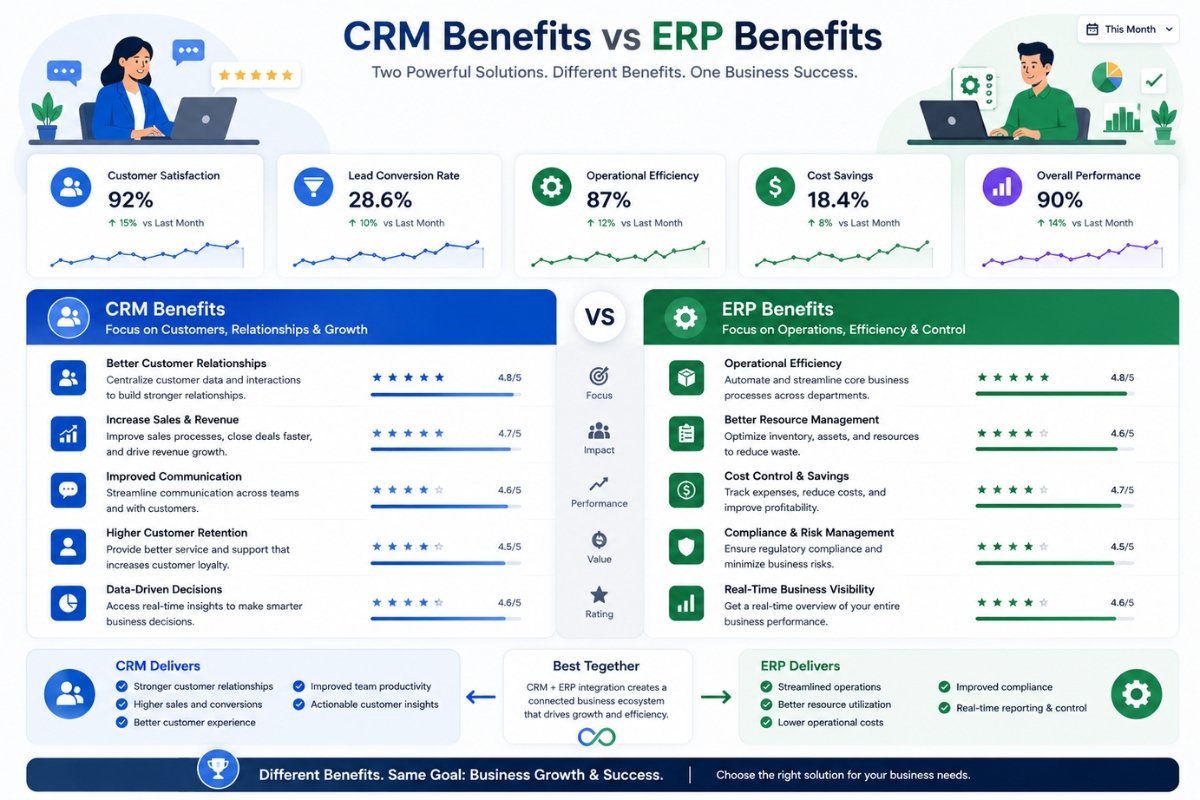
CRM Benefits
• Better customer management
• Faster sales workflows
• Improved communication
• Higher lead conversion
• Better retention
ERP Benefits
• Better operational control
• Accurate financial visibility
• Inventory optimization
• Process standardization
• Improved business efficiency
CRM vs ERP Challenges
CRM Challenges
• Team adoption issues
• Data quality problems
• Subscription costs
• Overcomplicated setups
ERP Challenges
• Higher implementation cost
• Complex onboarding
• Longer deployment
• Training requirements
CRM vs ERP Pricing
CRM pricing:
Usually easier entry pricing.
Examples:
• Free CRM plans available
• Monthly SaaS pricing
ERP pricing:
Usually significantly more expensive.
Reasons:
• Larger systems
• Deeper integrations
• Custom implementation
Popular CRM Software
• HubSpot CRM
• Zoho CRM
• Salesforce
• Freshsales
• Pipedrive
Popular ERP Software
• SAP ERP
• Oracle ERP Cloud
• NetSuite
• Microsoft Dynamics
• Odoo ERP
CRM vs ERP for Small Businesses
Small businesses often ask:
Do we need CRM or ERP?
General answer:
If your main problem is customer management → CRM
If your main problem is operations management → ERP
Most small service businesses benefit from CRM first.
CRM vs ERP for Growing Companies
Growing businesses may eventually need both.
Example growth path:
Stage 1:
CRM
Stage 2:
CRM + accounting tools
Stage 3:
ERP integration
This is common scaling behavior.
Final Comparison Table
| Category | CRM | ERP |
|---|---|---|
| Customer Management | Excellent | Limited |
| Sales Tracking | Excellent | Limited |
| Inventory Management | Weak | Excellent |
| Accounting | Weak | Excellent |
| HR Management | Weak | Excellent |
| Ease of Setup | Easier | Harder |
| Pricing | Lower | Higher |
| Scalability | Good | Excellent |
Final Verdict
CRM and ERP are not competitors in the traditional sense.
They solve different problems.
Choose CRM if:
• Customer management matters most
• Sales growth is the goal
• Lead tracking is critical
Choose ERP if:
• Operations are complex
• Inventory matters
• Financial process control is needed
Choose both if:
• Business growth requires customer + operational integration
Best Recommendation
For most startups and service businesses:
Start with CRM.
For inventory-heavy or operational businesses:
ERP may be more important.
For scaling companies:
CRM + ERP integration delivers the strongest results.

2 thoughts on “CRM vs ERP: What’s the Difference?”